
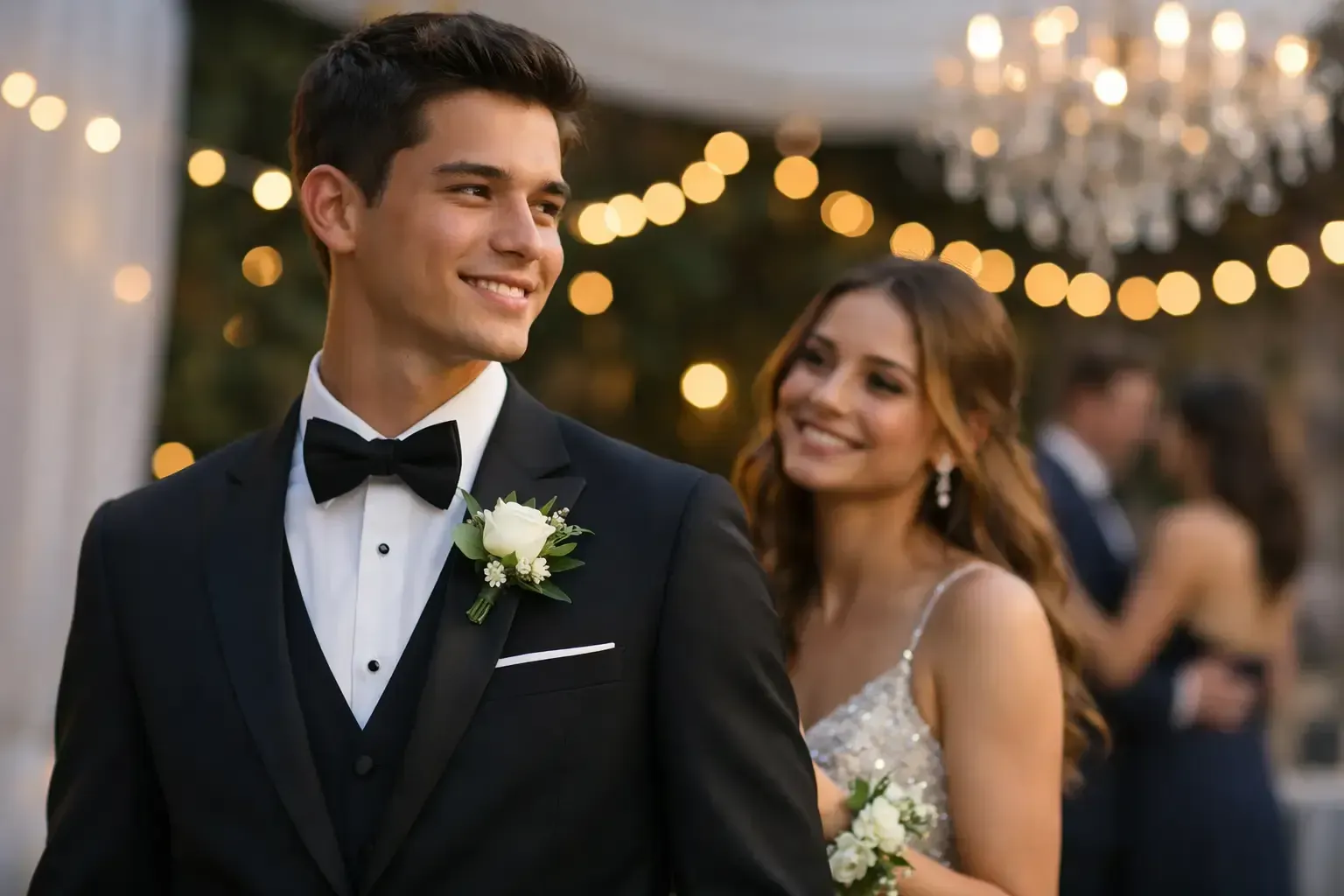
The difference between looking appropriately dressed and truly exceptional on your wedding day often comes down to one decision: tuxedo versus suit wedding styling. Both can look refined, formal, and memorable. The right choice depends on the tone of the event, the time of day, the venue, and how you want to feel when you see yourself in the photos years from now.
For some grooms, the answer is immediate. A black tie evening wedding in a grand ballroom calls for a tuxedo. For others, the decision is less obvious. A garden ceremony, a modern rooftop reception, or a destination celebration may feel better suited to a beautifully tailored suit. What matters most is not choosing the more expensive option or the trendier one. It is choosing the garment that fits the occasion and presents you at your best.
Tuxedo versus suit wedding attire: the real difference
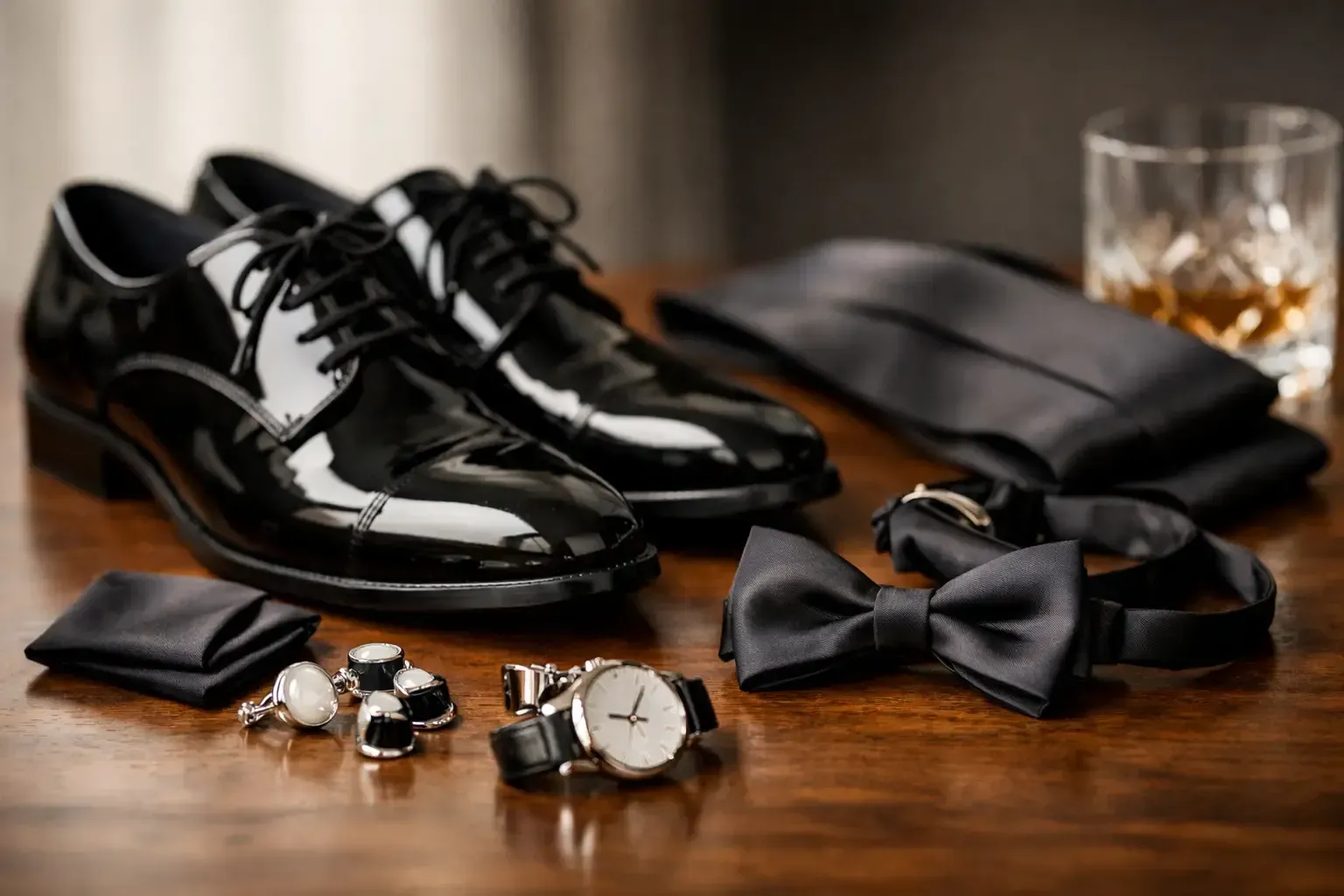
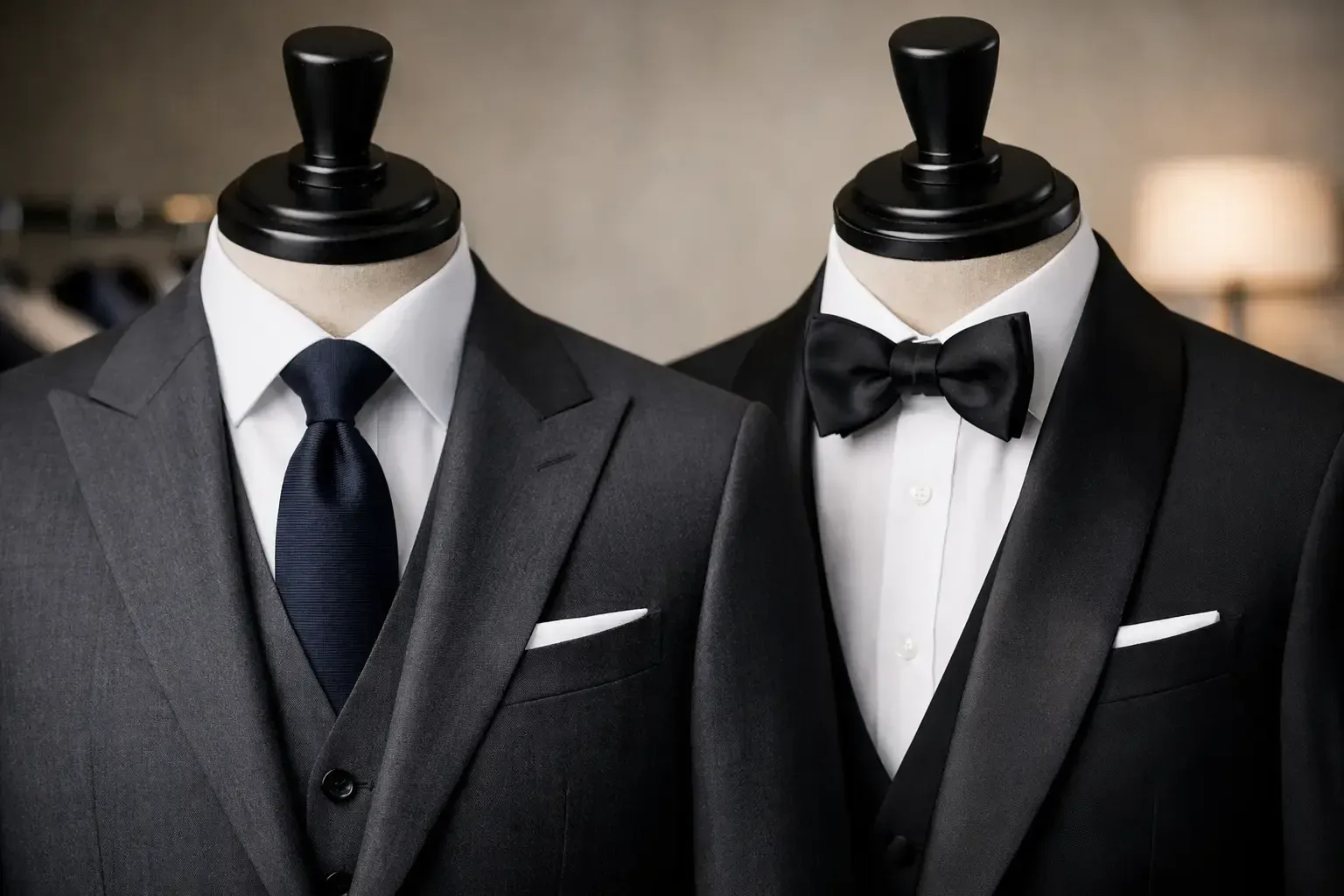
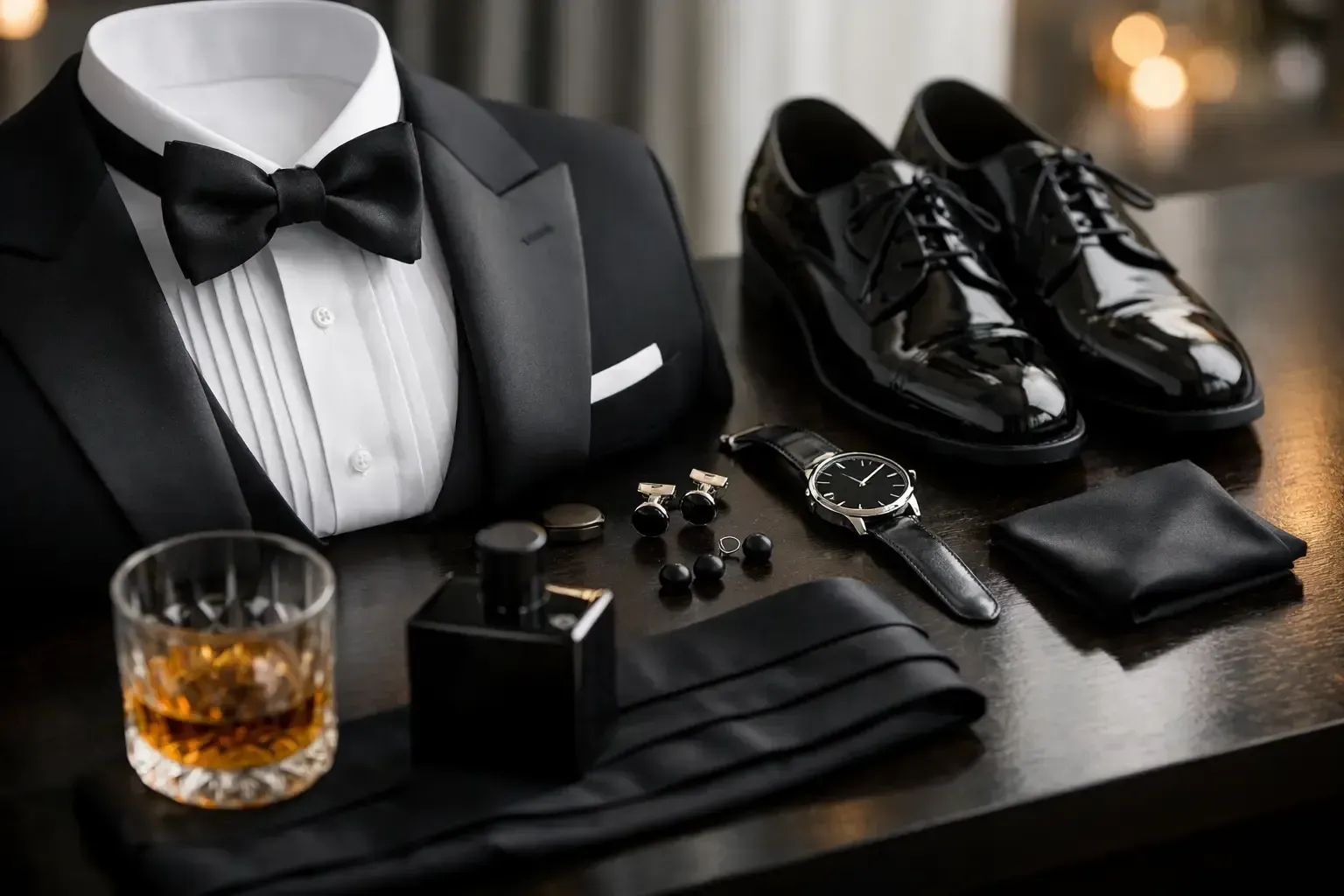
A tuxedo is defined by formal details. Satin or grosgrain lapels, covered buttons, a satin stripe on the trousers, and styling that pairs naturally with a formal shirt and bow tie set it apart. It is designed for elevated evening occasions and carries a level of polish that is difficult to replicate with a standard suit.
A suit is more versatile and generally less ceremonial in construction. It uses matching fabric throughout the jacket and trousers, usually without satin accents. That does not make it casual. A well-cut suit in the right fabric and color can feel every bit as elegant, especially at weddings where the dress code is formal, cocktail, semi-formal, or intentionally relaxed.
The question is not whether one is better than the other in every case. The question is which one aligns with your wedding.
When a tuxedo is the right call
If your wedding is black tie, the decision is already made. A tuxedo is the standard, and wearing one shows respect for the setting and dress code. It also creates visual consistency if your guests are dressing formally.
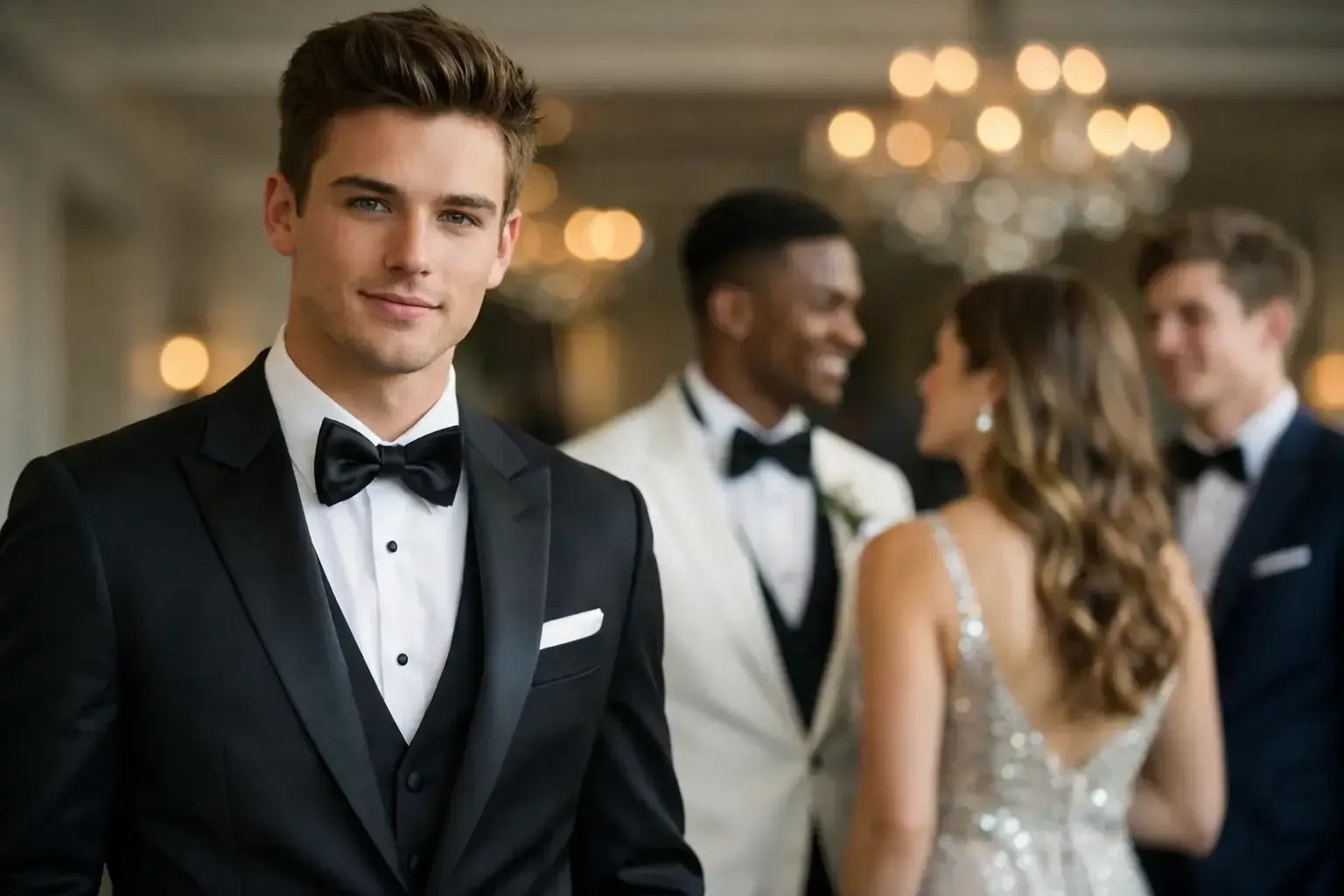
A tuxedo is especially strong for evening weddings. There is something unmistakably sharp about a dinner jacket under evening lighting, whether you are in a hotel ballroom, historic venue, or upscale private club. It photographs beautifully because the contrast details, clean lines, and formal accessories are meant to stand out.
A groom may also choose a tuxedo simply because the moment calls for more ceremony. Weddings are not ordinary events. Even when the setting is intimate, some men want their attire to reflect the significance of the day in a way that feels elevated beyond what they would wear to work, dinner, or another formal gathering.
That said, a tuxedo can feel too formal if the rest of the event is understated. If the venue is rustic, the ceremony is outdoors in daytime heat, or the guest dress code is more relaxed, a tuxedo may look disconnected from the atmosphere unless it is styled carefully.
When a suit makes more sense
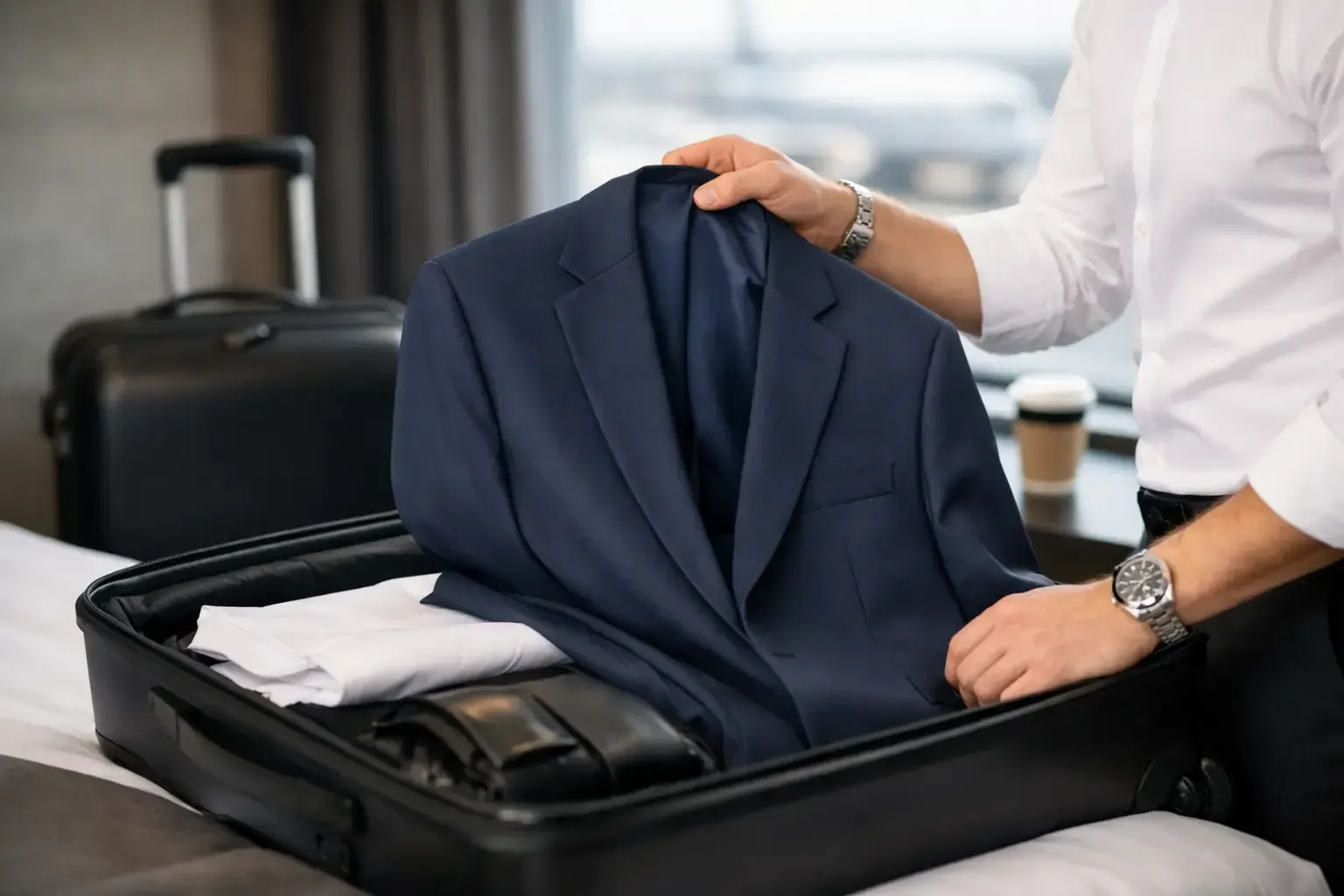
A suit is often the smarter choice for daytime weddings, outdoor celebrations, destination weddings, and events with a dress code that stops short of black tie. It offers more flexibility in color, fabric, and styling, which can be a major advantage when the wedding has a distinct season or aesthetic.
A navy suit, for example, can look crisp and formal enough for a church ceremony while still feeling appropriate at a country club reception. A mid-gray or charcoal suit offers a clean, confident look for city weddings. Lighter neutrals and textured fabrics can work beautifully for spring and summer celebrations.
There is also a practical benefit. Many grooms appreciate that a custom suit can live on after the wedding. It can be worn to future events, styled separately, or used for professional occasions. A tuxedo has a more specific role. It is unmatched when the moment suits it, but it is naturally less versatile.
That does not mean a suit is the compromise choice. In many weddings, it is the more refined answer because it feels intentional rather than overdone.
Formality, venue, and time of day
The easiest way to decide between tuxedo versus suit wedding attire is to look at the event in three layers: formality, venue, and timing.
Start with formality. If the invitation says black tie, wear a tuxedo. If the event is formal but not explicitly black tie, either option may work depending on the venue and styling. If the wedding is cocktail or semi-formal, a suit is usually the better match.
Then consider the venue. A tuxedo belongs naturally in elegant, architectural, and evening-driven spaces. A suit has more range. It can be adapted to luxury hotels, outdoor estates, private residences, and destination settings without looking out of place.
Time of day matters more than many grooms realize. Tuxedos are traditionally eveningwear. A late afternoon or evening ceremony opens the door to black tie dressing more comfortably. For morning or midday weddings, a suit generally feels more balanced.
None of these rules are rigid, but they are useful. The best dressed grooms are not simply choosing what looks impressive on a hanger. They are choosing what feels right in context.
The fit matters more than the category
A poorly fitting tuxedo will never look more sophisticated than a perfectly tailored suit. This is where many wedding decisions go off course. Men become focused on the label of the garment and overlook the silhouette.
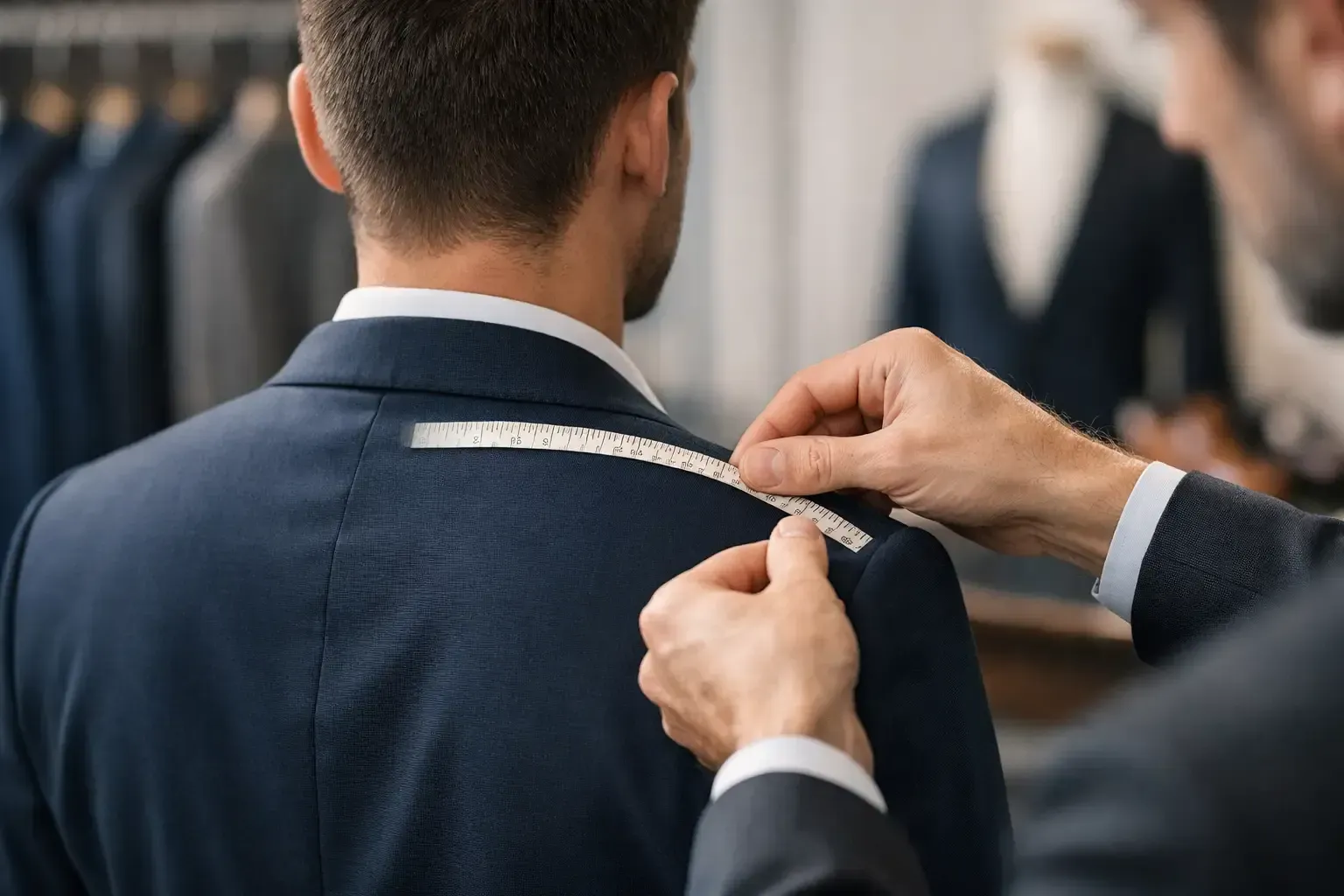
On a wedding day, photographs capture every angle. Shoulder fit, jacket length, sleeve exposure, trouser break, waist suppression, and overall balance all become visible. A garment tailored to your body creates a cleaner line, a stronger posture, and a more confident presence.
For slender men, off-the-rack options often feel too boxy or long. For broader builds, they may pull at the buttoning point or sit awkwardly through the chest and shoulders. Custom clothing solves that problem by shaping the garment around the wearer rather than forcing the wearer to adapt to the garment.
That is often the real luxury. Not just premium fabric or elegant styling, but the confidence of wearing something tailored to perfection for one of the most important days of your life.
Styling changes the message
A tuxedo and a suit can each shift dramatically depending on how they are styled. A black tuxedo with a shawl lapel, formal shirt, and bow tie reads classic and polished. A white dinner jacket creates a more fashion-forward statement for warm-weather evening weddings. Velvet can feel rich and distinctive in fall and winter, though it needs the right setting to avoid looking theatrical.
With suits, the range is even broader. A dark suit with a crisp white shirt and black tie can feel nearly as formal as eveningwear in the right setting. A suit with a softer tie, textured fabric, or seasonal color palette can feel personal and relaxed without losing elegance.
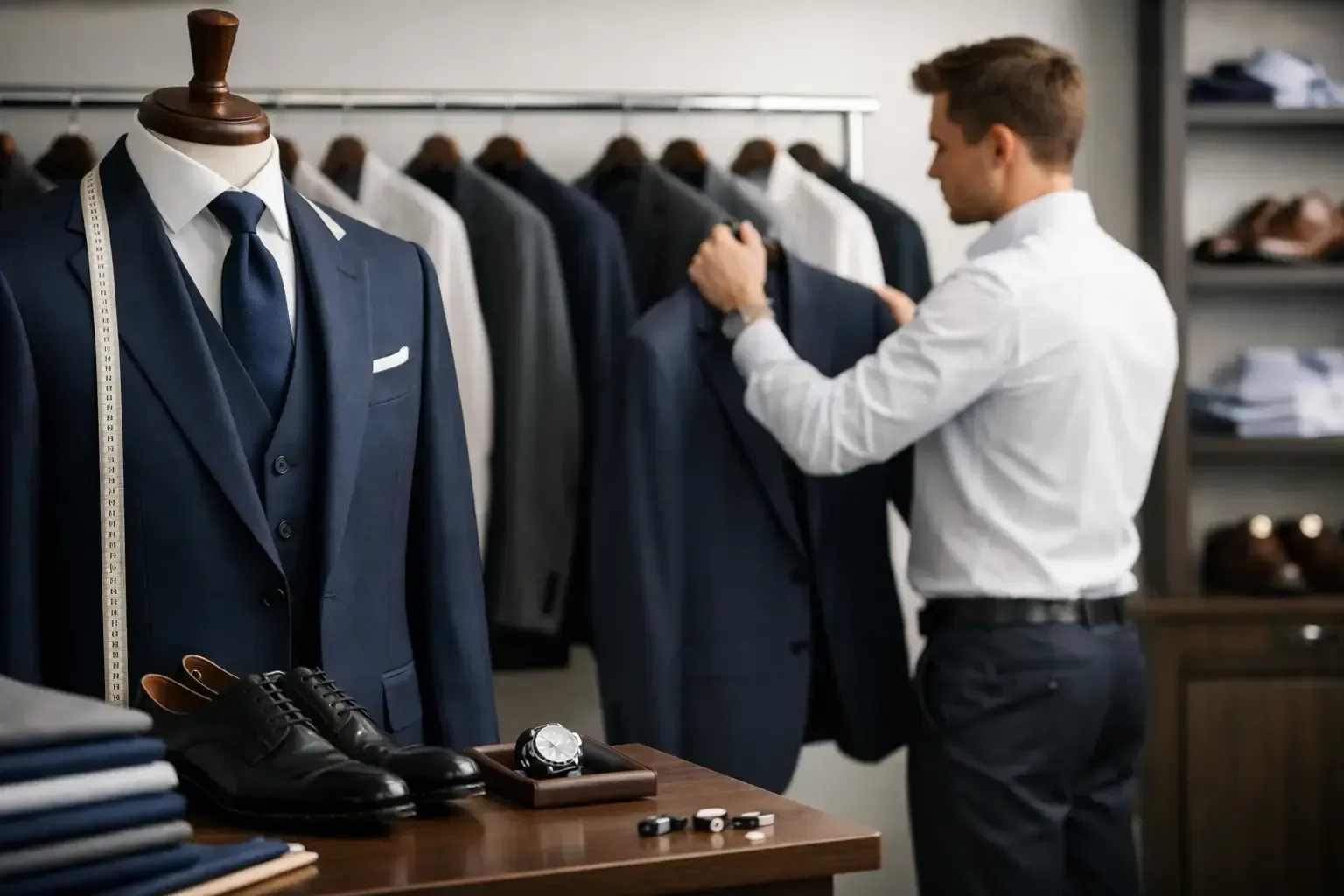
This is why a consultation matters. The garment should not be selected in isolation. Shirt choice, lapel shape, fabric tone, footwear, boutonniere, and even the styling of the wedding party all affect whether the final look feels cohesive.
Should the groom stand apart from the groomsmen?
Usually, yes - but with restraint.
If the groom wears a tuxedo and the groomsmen wear suits, the distinction is clear without feeling forced. If everyone wears suits, the groom can separate himself through fabric, color depth, lapel shape, tie choice, or a more elevated accessory approach.
The goal is not to look unrelated to your wedding party. It is to look like the central figure within a coordinated visual story. That balance is easier to achieve when the garments are designed with the full wedding aesthetic in mind rather than selected one by one from different sources.
Which option feels more timeless?
Both can be timeless when they are done well.
A classic black tuxedo is one of the most enduring garments in menswear. It has looked elegant for generations and will continue to do so. A beautifully tailored navy or charcoal suit also holds up exceptionally well in photographs and rarely feels dated.
What ages poorly is not the tuxedo or the suit itself. It is chasing novelty for its own sake. Extreme proportions, overly trendy colors, and details chosen for short-term impact often lose their appeal faster than clients expect.
Timelessness usually comes from restraint, quality, and fit. That is true whether you choose satin lapels or not.
The best tuxedo versus suit wedding choice is personal
Some men want the unmistakable occasion of a tuxedo. Others want the flexibility and refined ease of a suit. Neither instinct is wrong. The best choice is the one that reflects the event, flatters your frame, and allows you to move through the day feeling fully like yourself, only more polished.
At Kamran Bespoke, that decision is shaped through personal guidance, fabric selection, and a fit experience designed around the client rather than a rack size. Because wedding attire should do more than meet a dress code. It should give you presence.
If you are deciding between a tuxedo and a suit, look beyond the category and focus on the impression you want to leave when the doors open, the photographs begin, and the day becomes a memory.