

Share this article

A fine wool suit does not wear out quickly because of age. More often, it loses its shape, finish, and presence because it is handled too often, cleaned too aggressively, or stored without much thought. Knowing how to care for wool suits is what keeps them looking sharp year after year, especially when the fit and fabric are worth protecting.

Wool is one of the most dependable suiting fabrics for a reason. It breathes well, drapes beautifully, and has a natural resilience that helps it recover from movement. But that resilience is not the same as indestructibility. A well-made suit rewards proper care, and it shows neglect faster than many people expect.

Why wool suits need a different kind of care

Wool is a natural fiber with memory. It can release wrinkles, hold a clean line, and maintain structure better than many synthetic blends. At the same time, it reacts to heat, pressure, moisture, and friction in ways that can either preserve the garment or shorten its life.

That is why caring for a wool suit is less about constant cleaning and more about smart maintenance. Too much dry cleaning can strip the fabric of its natural character. Too little attention between wears can allow dust, body oils, and creasing to settle in. The goal is balance.

If your suit is custom made or tailored to a precise silhouette, this matters even more. A beautifully cut garment depends on shape, drape, and proportion. Once the cloth becomes shiny, flattened, or misshapen, even an excellent fit can look tired.

How to care for wool suits between wears

The best care routine happens at home, in the small moments after you take the suit off. This is where longevity is usually won.

Start by giving the suit time to rest. If you wear suits often, avoid wearing the same one on back-to-back days whenever possible. Wool needs time to recover from the stress of movement and body heat. Rotating your wardrobe helps the fibers spring back and reduces premature wear in the seat, knees, and elbows.

After wearing, use a proper clothing brush made for suiting fabrics. A few light passes remove surface dust, lint, and particles that would otherwise settle into the weave. Brushing also helps refresh the nap of the fabric, especially on darker suits that can show buildup more easily under light.

Then let the suit air out before returning it to the closet. Do not place it back in a crowded space immediately after a long workday, wedding, or evening event. Hang it in a well-ventilated area for a few hours so moisture and odors can dissipate naturally.

The right hanger and storage make a real difference

One of the simplest ways to protect a wool suit is to hang it correctly. Thin wire hangers are a poor match for a structured jacket because they do not support the shoulders. Over time, they can distort the shape and create pressure points where the garment should remain smooth.

Choose a broad, contoured wooden hanger for the jacket. It supports the shoulder line and helps the coat keep its intended form. Trousers should be hung neatly by the hem or folded cleanly over a trouser bar, depending on your preference and closet space. Either approach works as long as the crease is respected and the fabric is not cramped.

Storage conditions matter too. Wool prefers breathable space, not compression. A packed closet invites wrinkling and friction. A breathable garment bag can be helpful for seasonal storage or travel, but plastic covers are less ideal for long-term use because they trap moisture and limit airflow.

Cedar can help discourage moths, but it should be used thoughtfully. It is useful as part of a clean closet environment, not as a substitute for proper garment care. Moths are drawn to soiled natural fibers, so the best defense is keeping the suit clean and aired out before storing it.

Steam is usually better than ironing

When clients ask how to care for wool suits at home, wrinkle removal is often where mistakes happen. The instinct is understandable - a quick pass with a hot iron seems efficient. But direct heat and pressure can leave wool shiny, flatten the texture, or mark the fabric permanently.

A handheld steamer or the steam function in a bathroom after a shower is gentler and usually more effective. Steam relaxes the fibers so light wrinkles can release without crushing the cloth. Keep a little distance between the steamer and the garment, and let the suit hang naturally while the wrinkles fall out.

If ironing is truly necessary, use a pressing cloth and the lowest suitable setting. Never press aggressively over the same area, especially around lapels, seams, and trouser fronts. Those details give the suit its dimension. Too much direct ironing can make a premium fabric look flat and overworked.

Spot cleaning and stain care

A small spot does not always mean the whole suit needs to be cleaned. In fact, rushing every minor issue to the dry cleaner can age the garment faster than the stain itself.

For a fresh spill, blot gently with a clean cloth. Do not rub. Rubbing pushes the stain deeper into the fibers and can rough up the surface. Water is not always the answer either, particularly with oil-based marks or darker fabrics that can ring if handled improperly.

If the stain is minor and surface-level, a careful blot may be enough until professional cleaning. If it is more noticeable, take the suit to a trusted cleaner promptly and explain exactly what caused the stain. Timing helps, but so does restraint. Home stain removers can be harsher than people realize.

The same principle applies to trouser hems and jacket collars, where buildup appears slowly. These areas collect oils and dust over time, so they benefit from regular light maintenance before they reach the point of deep cleaning.

How often should wool suits be dry cleaned?

Less often than many people think. Wool suits should not be dry cleaned after every wear. Unless the suit has a stain, odor, or visible soil, frequent cleaning is unnecessary and can be counterproductive.

For occasional wear, a few cleanings per year may be enough. For heavier rotation, the schedule depends on climate, use, and fabric weight. A suit worn in Houston heat and humidity will have different care needs than one worn mainly in climate-controlled offices. The right answer is not a fixed number. It depends on how the suit is used and whether it is being maintained properly between cleanings.

Choose a reputable cleaner with experience handling structured garments and fine wool. This is especially important for bespoke or made-to-measure pieces, where pressing and finishing must respect the garment’s intended shape. A poor cleaning job can affect more than cleanliness - it can alter the look of the suit.

Travel care for wool suits

Travel is where even disciplined suit care can slip. Folding a suit carelessly into a suitcase almost guarantees unnecessary creasing.

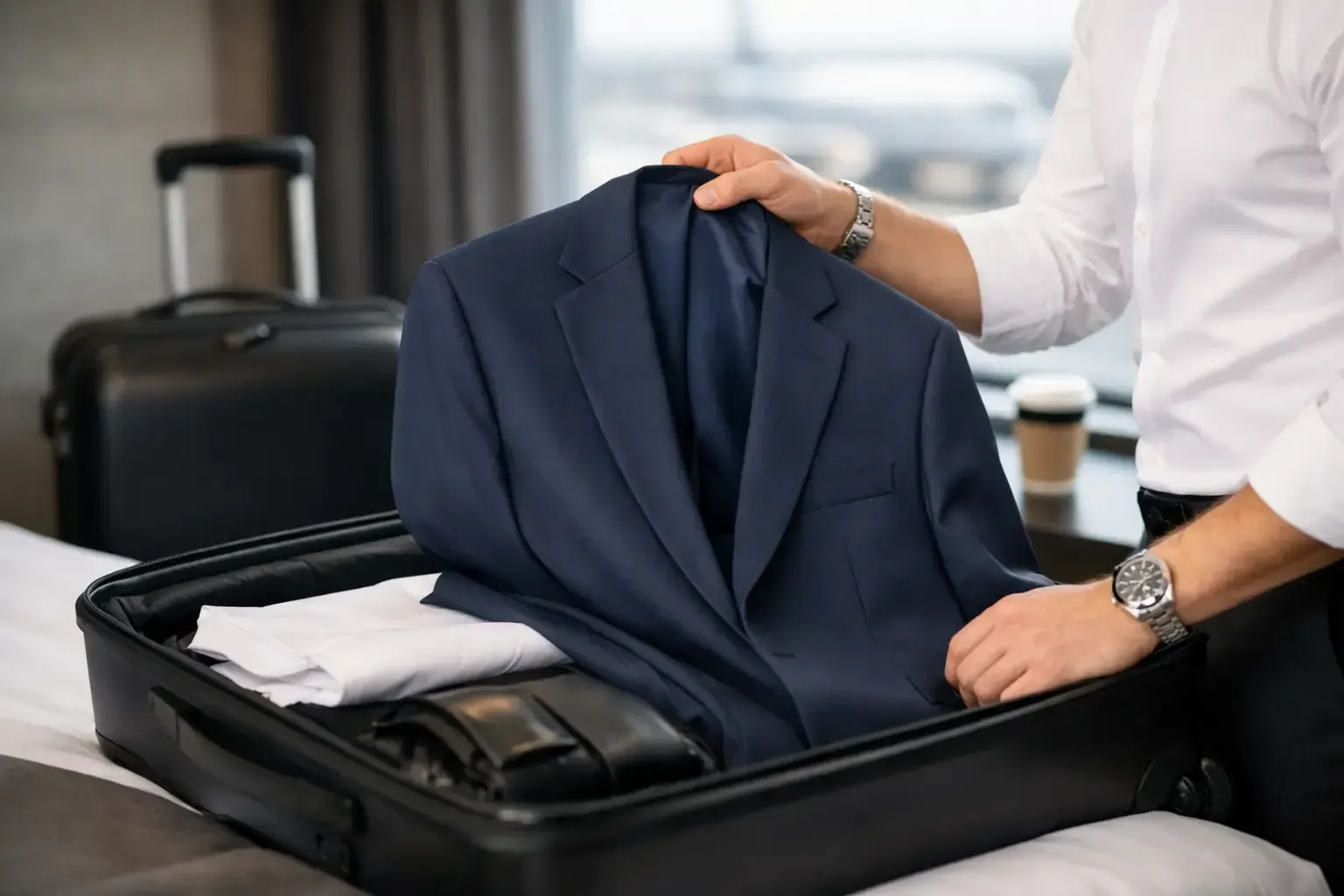
If you travel often for business or events, a dedicated garment bag is worth using. It protects the jacket from harsh folds and keeps the suit separated from shoes, belts, and other items that can snag the fabric. Once you arrive, unpack the suit immediately and hang it up. A little steam after travel usually restores the garment quickly.

For shorter trips, some wrinkles are unavoidable, and that is not a sign of damage. Wool generally recovers well when given time, air, and light steam. The real problem is leaving the suit compressed for too long.

Seasonal care and long-term preservation

Before storing a wool suit for a season, make sure it is clean enough to put away properly. This does not always require dry cleaning, but it does require inspection. Any unseen residue, body oil, or food trace can settle in over time and attract damage.

Store the suit in a breathable bag in a cool, dry area with room around it. Check on it occasionally rather than forgetting it for months. Long-term care is not complicated, but it does reward consistency.

At Kamran Bespoke, we view a wool suit as more than a purchase. It is part of how a man presents himself in rooms that matter. Proper care preserves not only the cloth, but the confidence that comes from wearing something that still looks tailored to perfection each time you put it on.

A well-made wool suit is designed to serve you for years. Treat it with patience, not overhandling, and it will continue to look refined long after lesser garments have lost their edge.

Recent Posts

A navy suit jacket in an open suitcase, with a person’s hands arranging it beside a black bag.
July 24, 2026
Business travel suit wrinkle resistance starts with the right cloth, fit, packing method, and care. Arrive composed and ready for every meeting, on time.

Man adjusting his cuff in a clothing showroom beside folded shirts and hanging blue jackets
July 23, 2026
Why are custom shirts more comfortable? Precision fit, refined fabrics, and thoughtful details create ease, confidence, and polish from morning to night.

Black tuxedo accessories arranged on a table: bow tie, cufflinks, shoes, watch, belt, and whiskey glass
July 22, 2026
A black tie outfit checklist for men: tuxedo, shirt, shoes, accessories, and fit guidance for weddings, galas, and formal evenings with calm confidence.

Tailor adjusting a dark suit on a mannequin in a menswear boutique, with dress shoes on display.
July 21, 2026
A bespoke wardrobe for new executives delivers the confidence, fit, and versatility needed to lead well from the first meeting to the final decision daily.

Tailor adjusting a navy suit jacket on a client in a fitting room
July 20, 2026
Learn the top reasons to choose bespoke tailoring, from a precise fit and premium fabrics to personal style, lasting value, and confident presence daily.
Men’s business attire and accessories laid out on a table: suits, shirts, ties, shoes, watch, wallet, and briefcase.
July 19, 2026
A guide to business wardrobe essentials for professionals who value exceptional fit, timeless style, and a confident presence from workday to dinner plans.
Three business professionals in suits standing with arms crossed in an office setting
July 18, 2026
Learn the best suit colors for interviews, how to match the role and company, and why fit, fabric, and restraint shape a confident first impression, too.
Three formal portraits: a man in a blue suit, a man in a tuxedo, and a bride and groom kissing.
July 17, 2026
Find suits in Sugar Land designed around your build, goals, and occasion, with premium fabrics and considered details that make confidence visible daily.
Three men in suits at an outdoor wedding, with a beige groom centered between navy-clad groomsmen.
July 16, 2026
A guide to wedding suit dress code for men, from black tie to cocktail attire, with fabric, fit, and styling guidance for a polished wedding look today.
Tailor fitting a navy suit jacket on a man in a menswear shop
July 15, 2026
Find suits in Katy designed around your proportions, purpose, and personal style. Enjoy considered craftsmanship for work, weddings, and formal events.